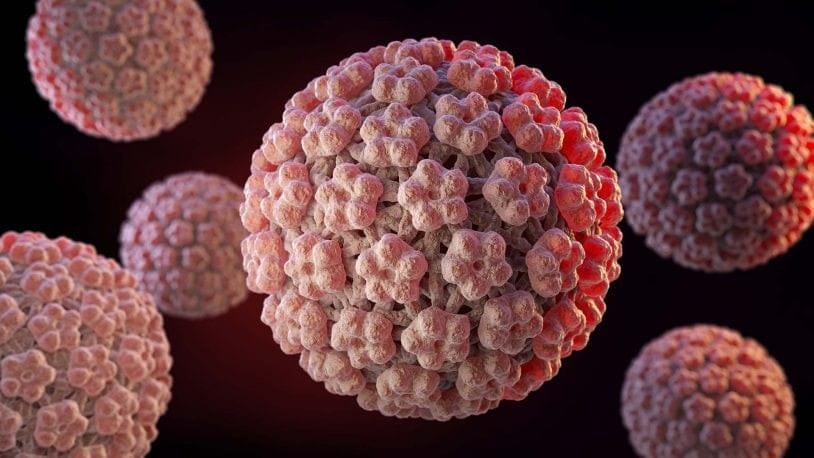
Genital Warts or Human Papillomavirus (HPV)
What are genital warts?
Genital warts are a type of sexually transmitted infection (STI) that appear as one or more small, flesh-colored bumps in the genital area, around the anus, and nearby regions. The infection is transmitted through direct skin-to-skin contact or exposure to the secretions of an infected person during anal, vaginal, or oral intercourse, as well as through sharing sexual toys. Transmission from mother to child during childbirth is also possible.
• Kissing and having unprotected sex (without a condom), including vaginal, anal, and oral intercourse
• Sharing sexual toys with a person infected with the virus
• Touching infected genital areas, even without full penetrative sexual intercourse
The most common sign of genital warts in women is the appearance of bumps in the following areas:
• Labia, groin, or cervix
• Inside or around the anus
• On the lips, mouth, throat, and tongue
In men, genital warts are usually seen in the following areas:
• On the penis
• On the scrotum and groin
• Inside or around the anus
• On the lips, mouth, throat, and tongue
Diagnosis of genital warts:
For a definite diagnosis of genital warts and for differentiating them from genital herpes, it is essential to consult a specialist physician. The doctor will ask about medical history and any previous sexually transmitted infections. During the clinical examination, the following steps may be taken to confirm the diagnosis:
Biopsy: A small sample of the affected tissue and warts is removed and sent to a specialized pathology laboratory for virological testing.
Anoscopy: If no visible warts or blisters are found on the skin, the specialist may examine the inside of the anus using an instrument called an anoscope for further evaluation.
Colposcopy: This test is performed only in women. Using a specialized instrument called a colposcope, the physician examines the inside of the vagina and the cervix for warts or any other lesions.
Pap smear: For women of different ages, Pap smear is an accurate cytological screening tool used in all gynecologic examinations and should be performed regularly.
If there are no visible lesions, the doctor may request a blood test to check for antibodies against the herpes simplex virus in order to determine any previous infection or a new active infection.
What diseases can Human Papillomavirus (HPV) cause?
Approximately 12 low-risk types of this virus cause genital warts. Two types (HPV 6 and 11) account for most cases of genital warts. Other types associated with genital warts include 42, 43, 44, and 55.
Genital warts can grow inside or outside the vagina or on the penis, and may spread to the surrounding skin. These lesions can also develop around the anus, on the external female genitalia (vulva), or on the cervix. Treatment is possible using topical medications or surgery, and the choice of treatment depends on the location of the warts.
Around 14 types of this virus are associated with cervical cancer, and they can also lead to cancers of the vulva, vagina, anus, and the oropharyngeal region (base of the tongue, back of the throat, tonsils). The most common high-risk types include 16, 18, 31, 33, 35, 39, 45, 51, 53, 55, 58, 66, and 68.
Common cutaneous warts are most often caused by types 2 and 7.
Plantar warts (warts on the soles of the feet) are most commonly caused by types 1, 2, and 4.
Flat warts on smooth skin surfaces are usually caused by types 3 and 10.
Oral papillomas are most frequently associated with types 6, 7, 11, 16, and 32.
Most cases of cervical cancer are caused by HPV types 16 and 18.