Cervical Cancer: Causes, Diagnostic Methods, and Prevention
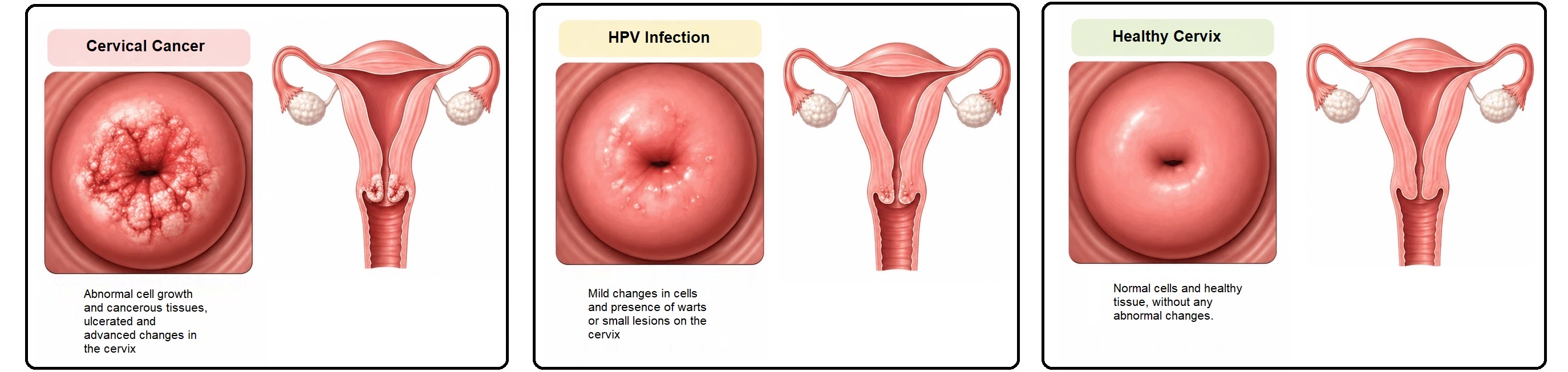
The cervix is the lower part of the uterus, covered by a thin layer of cells. When the Human Papillomavirus (HPV)—especially high-risk strains—enters these cells, it can cause abnormal changes. The infected cells may become damaged and lose their natural growth pattern. These changes usually occur gradually over several years and, if left undiagnosed and untreated, can lead to cervical cancer.
One of the most important ways for early detection of these changes is by performing screening tests such as the Pap smear and its advanced method, ThinPrep. These tests can identify initial changes in cervical cells. Detecting these changes in the early stages allows for effective treatment and will prevent the disease from progressing to cancer.
In recent years, a more precise method for diagnosing HPV infection has been introduced, known as the Digene HPV test. This test can be used independently to diagnose HPV infection or in conjunction with a Pap smear to provide a more comprehensive assessment of the status of cervical cells. The combination of these methods helps physicians better evaluate the risk of pre-cancerous or cancerous lesions.
Colposcopy and Its Role in Diagnosis
One of the standard methods for a more detailed examination of potential cervical lesions is Colposcopy. This is considered a specialized medical examination in which the physician uses a device called a colposcope to view the cervix, vagina, and surrounding tissues with magnification. This device allows for precise observation of the tissue surface, enabling the physician to detect abnormal areas.
If suspicious areas are observed, the physician can perform a targeted biopsy so that the exact nature of the lesion can be determined through pathological examination. In some cases, endocervical canal sampling is also performed, which is particularly important for diagnosing cervical adenocarcinoma and its pre-cancerous lesions. A definitive diagnosis of pre-cancerous lesions like CIN or cervical cancer is only possible through histological examination of a biopsy sample.
The main goal of colposcopy is the early identification of pre-cancerous lesions and treating them before they develop into cancer. Today, some advanced colposcopes are equipped with cameras and are used for medical documentation in addition to diagnostic purposes.
The Importance of Screening in Prevention
Regular screening plays a very important role in the prevention of cervical cancer. The goal of this screening is to identify pre-cancerous changes in cervical cells. If these changes are detected at early stages, their progression to cancer can be prevented. Also, in some cases, screening can identify cancer in the early stages, making treatment much more successful.
There are three main methods for cervical cancer screening:
- HPV Test: In this method, the presence of high-risk HPV types in cervical cells is checked.
- Pap Smear Test: In this test, a sample of cervical cells is collected and examined for the presence of abnormal changes. These changes may be caused by an HPV infection and, if not treated, can turn into cancer.
- Combined HPV and Pap Smear Test: In this method, both tests are performed simultaneously to examine both the presence of the virus and cellular changes.
During a Pap smear, the physician uses an instrument called a speculum to open the vagina and collects a sample from the surface of the cervix. The collected samples are sent to the laboratory for examination.
It is recommended that women begin regular screening at age 21. If the test result is normal, usually, based on the physician's opinion, the next test can be performed every three years.
Ways to Prevent Cervical Cancer
Prevention of cervical cancer is possible by following several important actions:
- HPV Vaccination: The HPV vaccine can protect the body against high-risk types of the virus, especially types 16 and 18, which are the main cause of many cervical cancer cases.
- Safe Sex: The HPV virus is mainly transmitted through skin-to-skin contact during sexual relations. Factors such as starting sexual activity at a young age, having multiple sexual partners, or contact with someone who has had multiple partners increase the risk of infection. Adhering to the following points is effective in reducing the risk:
- Avoiding the start of sexual activity at a young age
- Limiting the number of sexual partners
- Using a condom in every sexual encounter
- Quitting Smoking: Studies have shown that smokers are more exposed to cervical cancer. Substances present in tobacco can damage cervical cells and weaken the immune system's ability to cope with an HPV infection.
- Attention to Long-term Use of Contraceptive Pills: Long-term use of oral contraceptive pills may be associated with an increased risk of cervical cancer. Research has shown that the longer these medications are used, the higher the risk increases; however, after stopping their use, this risk gradually decreases.
Global Prevalence of Cervical Cancer
Cervical cancer is one of the most common cancers among women. According to global statistics, about 660,000 new cases of this cancer were reported in 2022, and nearly 350,000 deaths occurred as a result. The highest rates of incidence and mortality are seen in low- and middle-income countries; an issue often due to limited access to HPV vaccination, screening programs, and appropriate medical services.
Research has also shown that women with HIV are about six times more likely to develop cervical cancer compared to non-infected women.
Potential Symptoms of Cervical Cancer
In the early stages, the disease may be asymptomatic; but if it progresses, symptoms such as the following may appear:
- Abnormal bleeding between menstrual periods
- Bleeding after menopause or after sexual intercourse
- Abnormal or foul-smelling vaginal discharge
- Persistent pain in the pelvis, back, or legs
- Weight loss and loss of appetite
- Feeling of discomfort in the vaginal area
- Swelling in the legs
If any of these symptoms are observed, visiting a specialist physician is essential.
Treatment Methods
Treatment for cervical cancer depends on the stage of the disease and may include the following methods:
- Surgery (in some cases, removal of the uterus and surrounding tissues)
- Radiotherapy
- Other treatment methods depending on the patient's condition
Early diagnosis plays a very important role in the success of treatment.

